

← Results/Research Funding · AI Matching · 2025
University of Lausanne (UNIL)
Panorama: Bringing the Right Grant to the Right Researcher
Internal track record + external grant landscape, matched by AI so researchers stop hunting and start applying
Internal × external
UNIL track record meets the open grant landscape
Per-researcher
personalized matches, not generic feeds
Always on
system watches the landscape so researchers do not have to
Faculty view
deans see where the funding really lives
Research grants are the lifeblood of every faculty, and finding the right one is its own full-time job. Most researchers either rely on a few familiar funders, ask around, or simply miss calls that would have been a near-perfect fit for their profile.
Panorama gives every faculty and department a clear view of where the funding really comes from, and tells each researcher when a new call appears that matches their work, their past wins, and their strengths. Less hunting, more applying to the right ones.
The problem
Faculties do not really know where their grants come from. The data is there (past applications, awards, who applied where, which calls were a fit) but it is scattered across departments, spreadsheets, and individual memories. Without that picture, leadership cannot tell which funders to invest in, and researchers cannot tell which calls are realistic for their profile.
On the other side, the external grant landscape moves fast: new calls appear, themes shift, eligibility rules change. Asking every researcher to track all of that on top of teaching and research is unrealistic, and it pushes everyone toward the same handful of familiar funders while real opportunities pass quietly.
What we built
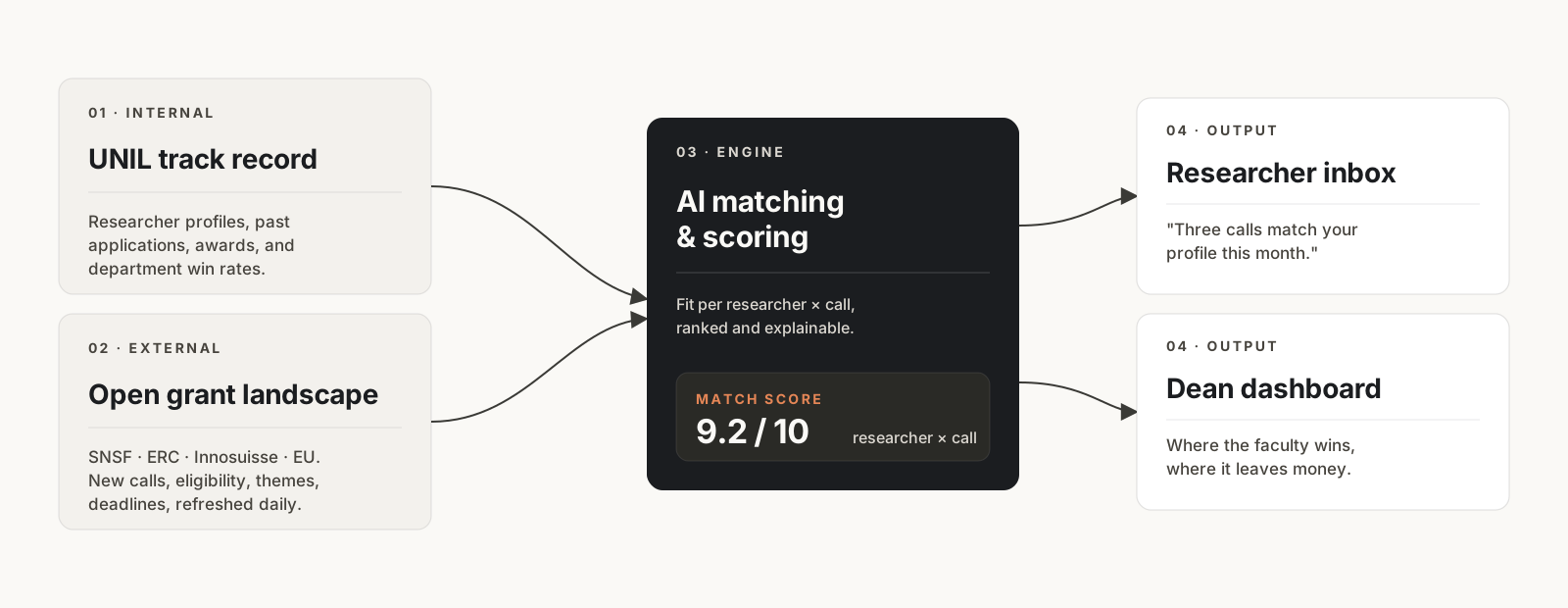
We bring the two sides together. Internally, we structure UNIL's own grant history into something readable: who applied to what, which teams won, where the faculty is strongest, where it is missing. Externally, our AI agents watch the grant platforms (SNSF, ERC, Innosuisse, EU programmes, and others) and enrich every new call with the information needed to judge fit.
Then we match. A scoring layer connects each researcher's profile, history, and skills to the calls that look most likely to land for them, with a clear explanation of why the match was made. Researchers get personalized recommendations, deans get a real-time dashboard of where the funding lives across the faculty.
The point is not to add another platform. It is to remove a job nobody really wanted: searching for grants. The system does the searching, scores the fit, and notifies the right researcher when something worth applying for shows up.
The result
The first faculty data analyses are already changing how UNIL leadership thinks about its funding mix. Patterns that were invisible across spreadsheets, such as which programmes a department wins disproportionately, which it consistently leaves on the table, become readable in one view.
For researchers, the goal is simple: open the platform once a week, see two or three calls that genuinely match the work, and skip everything else. Less time spent searching, more time spent on the proposals that have a real chance.
From the record
Techniques
- Structured ingestion of internal grant history
- AI-driven crawling and enrichment of external grant platforms
- Profile × call matching with explainable scores
- Personalized researcher recommendations
- Faculty-level dashboards for strategy and planning
Stack
- Python data pipelines
- LLM-based grant enrichment
- Vector search for profile × call matching
- Internal dashboards for deans and PIs
A problem like this?